- Force Multipliers
- Posts
- The Only Productivity System You Actually Need
The Only Productivity System You Actually Need
Why you don't need a productivity app to be productive

Regina Gerbeaux
April 05, 2026 • Reading Time: 5 minutes
Almost every founder and executive I've ever coached has asked me some version of the same question.
"Regina, what does your morning routine look like?"
Or: "Should I be time-blocking?"
Or my personal favorite: "I just heard about this guy who journals for an hour before checking email and his revenue tripled. Should I try that?"
And every time, I want to gently say the same thing: the system is not your problem.
The reason most productivity systems don't stick, and I've seen this play out with hundreds of clients, is that people try to install a system before they've done the work of figuring out what they're actually trying to optimize for. You can have the most beautifully color-coded calendar in the world. If it's not built around what you actually value, it's just a really pretty waste of time.
So let's start there.
Start with your values. For real.
There's a card game I recommend to almost everyone I work with. It's called the Live Your Values deck. Beautifully illustrated set of cards, each one with a value, a definition, and an image. Your job is to sort them into three piles: matters a lot, matters some, doesn't matter.
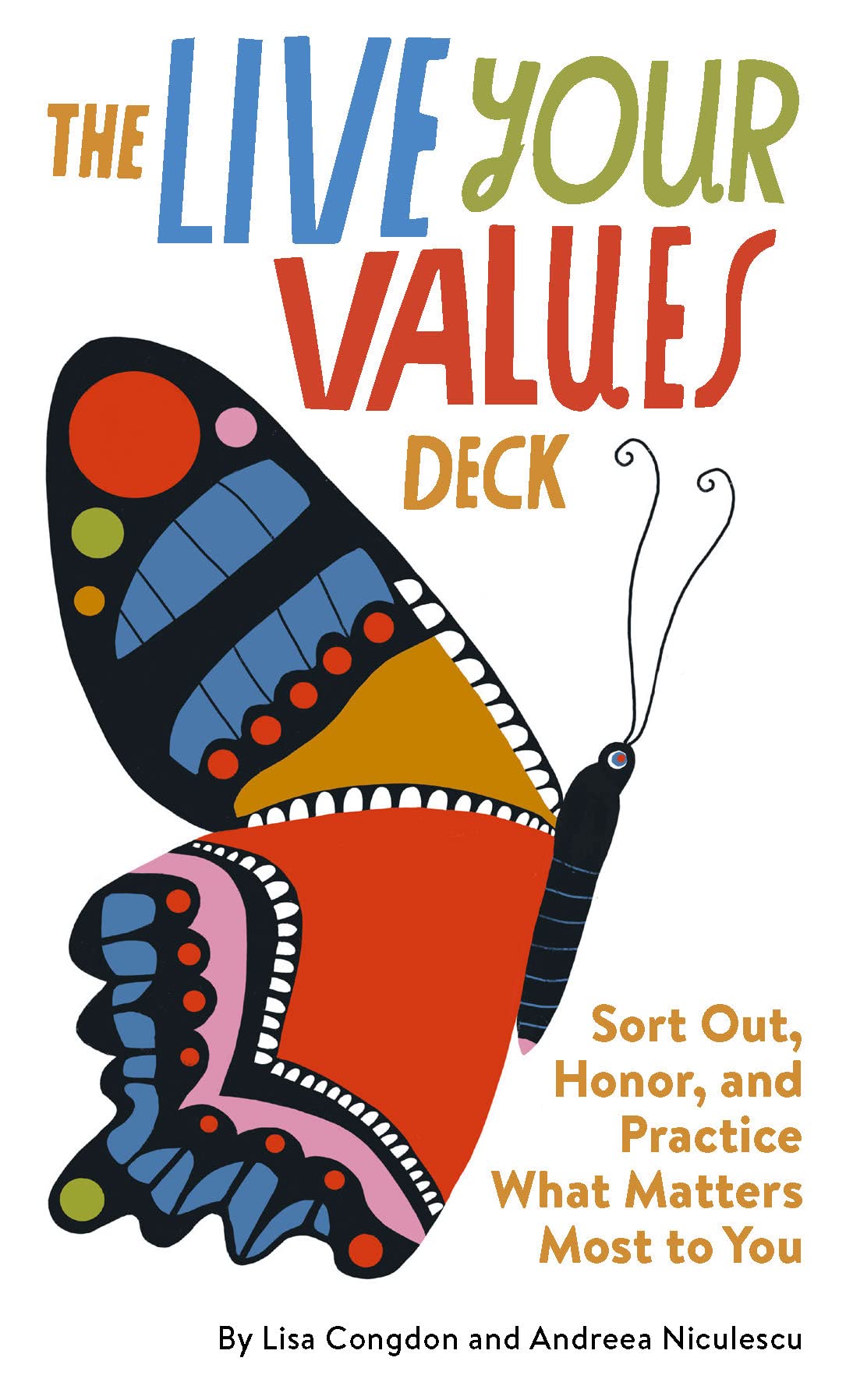
Discard the bottom two piles. You'll be left with roughly half the deck. I know... everything seems to matter!
But that's the point. You can't have 30 things matter equally. If everything matters, nothing matters. If everything is urgent, nothing is urgent. You get the picture.
Now get it down to your top 10.
Then, stack rank them.
I know. It's brutal. How do you choose between integrity and family? Freedom and impact?
But that's exactly the point. When you're forced to rank your values, you're forced to confront how your priorities actually shape your decisions, and how those decisions shape where your time goes.
And here's what I love about this exercise: nobody can tell you you're wrong.
Nobody can look at your stack-ranked list and say, "You have the wrong values. You should care more about money." That's not how this works. These are YOURS! Which means you're the only one who can define them, and the only one who has to live by them.
Your time is just another currency.

Here's a reframe that tends to land hard in my coaching conversations: your time is an investment portfolio.
When you're young, a financial advisor will tell you to go aggressive. You have time to recover from losses, and compounding works in your favor. As you approach retirement, you get more conservative. You protect what you've built.
Your time works the same way. Time is also something you invest, and it is your most precious currency, even more precious than money. The question is whether you have a thesis for how you're investing it, or whether you're just following someone else's strategy.
This is why I get tired of hearing when someone tells me they're copying a routine they heard about on a podcast:
"This guy wakes up at 5am, journals for an hour, meditates before checking email."
Cool. That guy is also not a parent of a three year old who has trouble sleeping through the night, and he doesn't have a company at your stage with the same things at stake that you have.
Consume the content. Learn from it. But weigh it against what you actually value. Their optimization function is not yours.
The Post-it note system. (Yes, seriously.)
Once you've done the values work, the productivity system almost writes itself.
I was working with a serial founder a while back. He was on his fifth company and was post-money - he didn't need to be building anymore; he did it purely for the love of the game.
He came to me with the classic founder overwhelm: he was building product, raising a round, showing up on podcasts, posting on socials every second of his life, had an overflowing inbox and countless unread DMs, all while trying to hire his founding team. This guy was consumed in chaos in every direction.
I asked him: "What's the ONE thing you absolutely have to do this week?"
He started listing every priority on his head, quickly getting overwhelmed. I waited.
"No. The one thing. If nothing else happens this week, what has to be true by Friday?"
He sat with it. "I need to map out what my product looks like, and then go build it."
"Then nothing else you're doing matters until that's done."

The look on his face was that particular mix of obvious and earth-shattering that I've come to love in coaching sessions. Because it is both.
Here's the system: buy a thick stack of Post-its. Every morning, write the one thing you're going to accomplish today. Stick it on your monitor.
That's it.
Then go do it.
Consistency over intensity, always.
This is the part people resist the most.
You don't have to show up perfectly every day. You don't need inbox zero every single day to be an inbox-zero kind of person.
But you do need more votes in favor of who you want to be than against it. (A hat tip to James Clear for that framing, because it's one of the best ones out there.)
Every action you take is a vote for an identity. If you want to be a founder who builds something extraordinary, ask yourself: what would a founder building something extraordinary do right now?
Miss a day? Fine. Miss a week? Recalibrate.
The goal is a consistent direction, not a perfect record.
Where you spend your time is what you actually value.
This is the part I have to deliver with a lot of love to almost every client. The things people say they care about and the things their calendar reflects are often completely different.
I've coached founders who will tell me, with full sincerity, that family is their number one priority, and then show me a schedule where they're booked solid six days a week.
I've worked with operators who say they want strategic impact, and then spend 80% of their time on administrative work that someone else could handle.
My job is to point that out as kindly as I possibly can.
If you have 29 open projects, you're not giving 100% to any of them. You're giving roughly 3.4% to each. Everyone in your life, your team, your family, your clients, is getting drops of you.
Knowing your values doesn't just help you say yes to the right things. It makes it genuinely easy to say no to everything else. When someone asks you to take on a new project, you don't have to agonize. You just ask: does this align with what I'm actually optimizing for right now?
If not, the answer is no. And you don't owe anyone an explanation for that.
I'll leave you with the question I ask at the start of almost every engagement:
What are you optimizing for right now?
If you can answer that clearly, the system will follow. If you can't, no system in the world will save you.
Until next time,

📌 Resources mentioned:
The Live Your Values Card Deck | Lisa Congdon & Andreea Niculescu
Was this newsletter forwarded to you? Are you here for the first time? If so, remember to subscribe below…

Want more operational content?
Check out Coaching Founder for downloadable Notion templates and write-ups on how to level up your execs, your teams, and yourself.
About Regina Gerbeaux
 | Regina Gerbeaux was the first Chief of Staff to an executive coach who worked with Silicon Valley’s most successful entrepreneurs, including Brian Armstrong (Coinbase), Naval Ravikant (AngelList), Sam Altman (OpenAI / Y Combinator), and Alexandr Wang (Scale). |
Shortly after her role as Chief of Staff, then COO, she opened her own coaching practice, Coaching Founder, and has worked with outrageously talented operators on teams like Delphi AI, dYdX, Astronomer, Fanatics Live, and many more companies backed by funds like Sequoia and Andreessen Horowitz.
Her open-sourced write-ups on Operational Excellence and how to run a scaling company can be found here and her templates can be found here.
She lives in the Pacific Northwest with her partner, daughter, and dog, and can be found frequenting 6:00AM Orangetheory classes or hiking trails nearby.
Reply